The Luxury of Less: Why the World's Most Discerning Travelers Are Choosing Fewer Destinations
There was a time when the ultimate status symbol in travel was volume. Forty countries before forty. Seven continents in a single decade. The well-stamped passport, fanned open at dinner parties like a deck of hard-won playing cards. For a certain generation of American traveler, the itinerary was the achievement — and the longer, the better.
That era, quietly but unmistakably, is drawing to a close.
Among the most discerning travelers today — those for whom budget is rarely the constraint and time is the true luxury — a deliberate countermovement has taken hold. They are booking fewer destinations. Staying longer. Saying no to the fourth city, the rushed transfer, the obligatory landmark photographed from behind a velvet rope. In its place, they are constructing something rarer: a journey that actually changes them.
The Psychology of the Edited Journey
Behavioral economists have long understood that more choices do not necessarily produce more satisfaction. The paradox of abundance — that an excess of options can generate anxiety rather than fulfillment — applies with particular force to travel. When an itinerary is overstuffed, the traveler is perpetually in motion but rarely fully present. Each destination becomes a preview rather than an experience.
"My clients used to arrive at our first consultation with a wish list that read like a geography textbook," says one New York-based luxury travel advisor who has spent two decades crafting bespoke itineraries for executives and philanthropists. "Now the most sophisticated ones come in and say, 'I want to understand one place — really understand it.' That's a profound shift in how people are thinking about what travel is for."
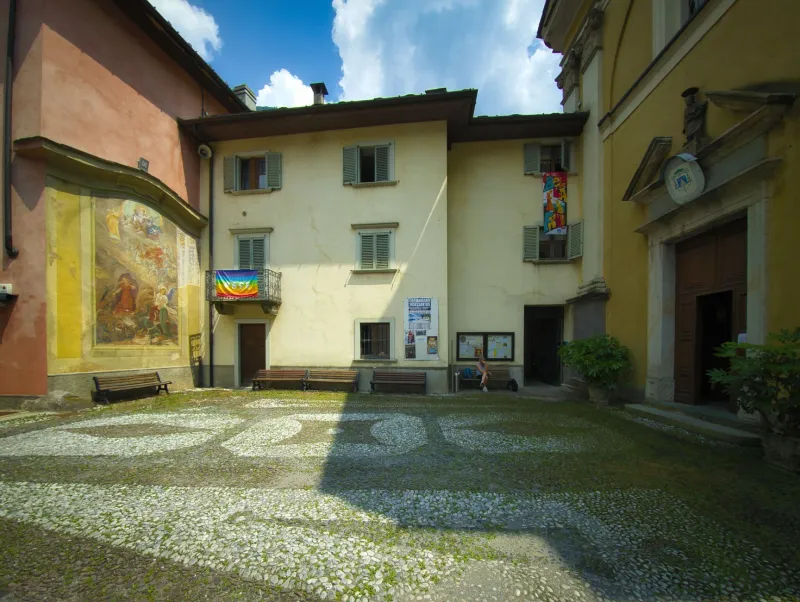
The psychological underpinning is straightforward: when we give ourselves permission to go deep rather than wide, anticipation sharpens, attention heightens, and memory consolidates more richly. A week spent in a single Umbrian village — learning the rhythms of its market, befriending its winemakers, tracing its medieval lanes at dusk — imprints far more permanently than a sprint through Rome, Florence, and Venice in the same number of days.
Redefining What "Doing Italy" Actually Means
Take Italy as a case study, because no destination better illustrates the old model's limitations. The classic American grand tour — Rome, the Amalfi Coast, Venice, Tuscany — remains enormously popular. It is also, by nearly every measure of genuine cultural immersion, profoundly incomplete.
A growing number of affluent travelers are instead anchoring themselves in a single region: spending ten days in Puglia, or a fortnight in the Langhe hills of Piedmont, or an extended stay in Sicily's lesser-known interior. They are hiring private historians rather than joining group tours. They are dining in homes, not just restaurants. They are attending the local sagra, the neighborhood feast that no guidebook bothers to list.
This approach demands more from the traveler — more research, more trust in a skilled advisor, more willingness to resist the gravitational pull of the obvious. But the rewards are proportional to the courage required.
"I spent three weeks in Oaxaca last year and never once felt I had exhausted it," recounts a San Francisco-based technology entrepreneur who now limits herself to two international trips annually, down from six. "I came home knowing people by name. I understood something about how that place actually works. No amount of country-collecting ever gave me that."
The Role of the Luxury Travel Advisor in an Age of Restraint
If the edited journey is the destination, the skilled advisor is the cartographer. The shift toward intentional, slower travel has, paradoxically, elevated the value of expert human guidance at a moment when algorithmic booking tools have never been more capable.
Curation — genuine curation, not the algorithmic assembly of top-rated options — requires a practitioner who understands not just logistics but aspiration. The best luxury travel advisors today describe their role less as planners and more as editors: their primary task is not adding experiences to an itinerary but removing the ones that don't belong.
"Anyone can book a suite at a celebrated hotel," observes a travel advisor based in Charleston who specializes in slow, immersive journeys through Southeast Asia and West Africa. "What I offer is the confidence to leave things out. My clients pay me, in part, to protect them from their own FOMO."
That protection has measurable value. Travelers who return from intentionally restrained journeys consistently report higher satisfaction, lower post-trip fatigue, and — perhaps most tellingly — a stronger desire to return to the same destination rather than immediately chasing a new one. The place has earned a relationship.
Exclusivity as a Function of Depth, Not Access
Luxury travel has long defined exclusivity through access: the private villa, the members-only club, the charter flight that bypasses commercial terminals. Those markers retain their appeal. But a more nuanced definition of exclusivity is emerging among travelers who have, in many cases, already experienced all of those things.
True exclusivity, in this new register, is the experience that cannot be replicated — not because it is expensive, but because it is specific. A private conversation with a master ceramicist in Kyoto. An unannounced afternoon at a family-owned olive estate in Crete. A guided walk through a Marrakech neighborhood where tourists simply do not go, led by a resident who has lived there for fifty years.
These moments are not available in a catalog. They are the fruit of slower travel, of earning trust through presence and patience — qualities that no amount of money can shortcut, but that time, generously allocated, invariably rewards.
Saying No as a Sophisticated Act
There is a particular confidence required to travel with restraint. American culture, broadly speaking, prizes ambition and scale. The traveler who visits thirty countries is assumed to have done more than the one who visited three. Unlearning this assumption is not trivial.
But among those who have made the transition, the consensus is consistent: the edited journey is not a lesser journey. It is a more honest one — an acknowledgment that attention is finite, that wonder requires space to breathe, and that the most enduring souvenirs are not objects but the quiet, irreversible ways a place has altered your understanding of the world.
To travel with intention is to accept that you cannot have everything, and to discover, in that acceptance, something far more valuable than everything ever was.
At Vai Alto, we believe the highest expression of travel is not the distance covered, but the altitude of experience achieved. Sometimes, the most elevated journey begins with a single, deliberate word: no.