Depth Over Distance: The Case for Lingering in Luxury
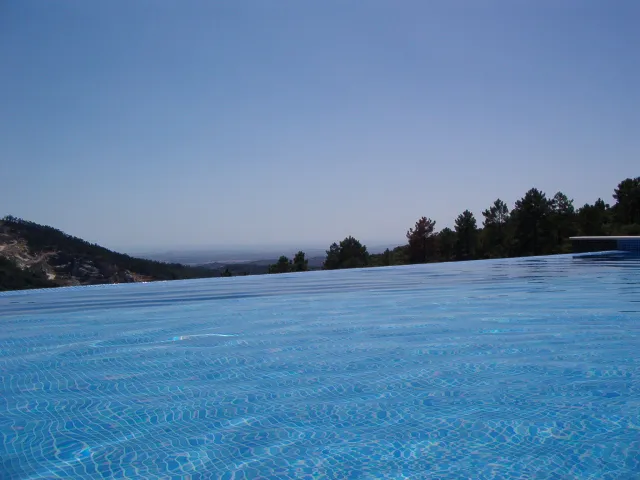
Photo: Forgoodnessake, CC BY-SA 4.0, via Wikimedia Commons
There is a particular kind of exhaustion that no amount of thread count can remedy. You recognize it in the business-class cabin on the return flight home—the hollow feeling of having seen a great deal while having truly absorbed very little. The Amalfi Coast at sunrise, Kyoto's bamboo groves at midday, a Maldivian overwater suite for two nights. Each experience was, by every measurable standard, extraordinary. And yet, something essential was missing.
The problem, increasingly acknowledged among the world's most seasoned travelers, is not the quality of the destinations. It is the pace. And for those with the financial latitude to design travel on their own terms, the most radical—and rewarding—shift available is simply to slow down.
The Illusion of the Itinerary
Modern luxury travel marketing has, for decades, celebrated abundance. Seven countries in fourteen days. The private jet that lands you in four capitals before the month is out. There is a certain status attached to this kind of velocity, a shorthand for both means and ambition. But the logic unravels quickly under scrutiny.
When you allocate two nights to a destination—however magnificent—you are, in effect, consuming it as a spectacle rather than experiencing it as a place. You arrive, you photograph, you depart. The five-star property becomes little more than an expensive staging ground between transfers. The culture, the rhythm, the particular quality of light on a Tuesday afternoon in a Provençal village square: these things cannot be scheduled into a 48-hour window.
Slow travel, by contrast, operates on a fundamentally different premise. It asks not how many places can I visit? but how deeply can I inhabit this one?
What Extended Stays Actually Unlock
Consider the difference between a three-night booking at a private villa in Tuscany and a three-week residency at the same property. On night one, you are a guest. By week two, you are something closer to a temporary local. The staff know your preferences without being asked. The estate manager introduces you to the family who has farmed the adjacent olive grove for four generations. You find yourself invited to a neighbor's Sunday lunch—not because it was arranged by a concierge, but because you were simply there long enough for it to happen organically.
These are the moments that outlast the journey itself. They are also, notably, the moments that cannot be manufactured at any price point. No amount of pre-arrival coordination produces the authentic connection that time alone generates.
From a purely financial standpoint, extended stays in luxury accommodations frequently yield meaningful advantages. Many premier properties—from the private-island resorts of the Caribbean to the high-altitude lodges of Patagonia—offer substantially reduced weekly and monthly rates for guests willing to commit to longer periods. The per-night cost of a world-class villa in the Greek islands drops considerably when booked for a fortnight rather than a long weekend. The value proposition, once reframed, becomes surprisingly compelling.
Choosing the Right Anchor
Slow travel demands a different kind of destination selection. The question shifts from which places should I see? to which single place could I inhabit for two weeks without diminishing returns?
The answer varies by traveler, but certain qualities tend to distinguish ideal slow-travel anchors. Layered destinations—those with enough cultural, culinary, natural, and social complexity to reward sustained attention—are essential. A beach resort engineered for passive relaxation may satisfy for a few days but rarely sustains genuine engagement over longer periods. By contrast, a region like Oaxaca, Mexico; the Douro Valley in Portugal; or the Big Island of Hawaii offers the kind of multidimensional richness that deepens with time rather than depleting it.
The accommodation itself matters enormously. A well-staffed private villa, a small luxury inn embedded in a working farm, or a heritage property with genuine roots in its community provides a fundamentally different base than a large international hotel brand, however impeccably appointed. The former becomes a home; the latter remains, however beautifully, a hotel.
The Wellness Dimension
There is a growing body of evidence—and considerable anecdotal consensus among frequent travelers—that the frenetic pace of conventional luxury itineraries exacts a measurable physical and psychological toll. Crossing multiple time zones in rapid succession, maintaining the social performance demanded by back-to-back new environments, and the low-grade logistical anxiety of perpetual transit all accumulate in ways that undermine the restorative purpose travel is supposed to serve.
Slow travel, by eliminating the churn, allows the body and mind to genuinely recalibrate. After three or four days in a single location, the traveler's nervous system settles. Sleep improves. Appetite adjusts to local rhythms. The quality of attention available for genuine experience—a long dinner, a morning walk, an unplanned conversation—increases substantially.
For those who invest meaningfully in wellness at home, it is worth asking whether a travel philosophy built on relentless movement is consistent with that commitment.
A Different Kind of Luxury
At its core, the slow travel argument is an argument about what luxury actually means. If luxury is defined primarily as access—to places, to properties, to experiences—then the multi-destination itinerary is its logical expression. Accumulate access; maximize exposure.
But if luxury is understood as the quality of one's engagement with life—the richness of connection, the depth of attention, the sense of genuine presence in a remarkable place—then the calculus reverses entirely. Fewer destinations, more time, deeper immersion. The freedom to leave a dinner table at midnight because the conversation is still good. The ability to return to the same market three Saturdays in a row and be recognized.
This is not a modest aspiration dressed up in philosophical language. It is, for those willing to relinquish the itinerary, among the most expansive forms of travel available. The world's finest places reward patience. The question is whether you are willing to offer it.